How to became an Aircraft Engineer or Aircraft Mechanic? (Step by Step) Complete Roadmap!
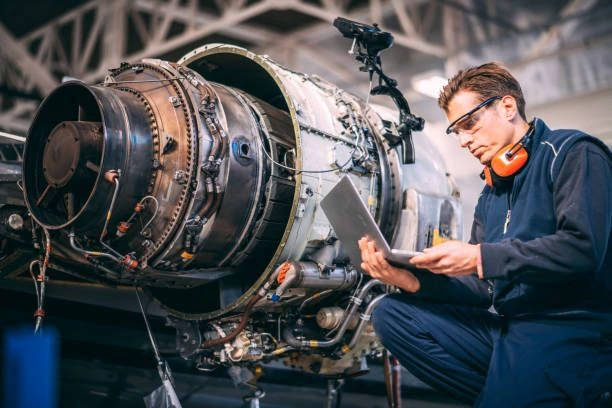
Becoming an Airport Engineer is an exciting (and exciting) job. These are the people assigned with the complete check for each aircraft nut and bolt before and after its flight. If you would like to work in Aviation, where the safety of several hundred thousand people depends on your actions each day, this is a good fit for you. The path is not an easy one, we all need formal education & training (obtaining the necessary credentials) and experience and obtain the proper Equipment (or tools used to accomplish your work).
Table of Contents
The 1st Step : Basic Qualification
First you must obtain your Basic Qualification: You must successfully graduate (earn a pass grade) in grades 11 and 12 and complete the Required Subject areas (Physics, Chemistry, Mathematics). You do not have to have taken all 3 (PCM) but will have to take/complete one or more of these. In India after high school, most people who obtain their diploma in Aerospace Engineering go on to obtain their Degree in either BEng or BSc,
however, if you complete the Diploma in 3 years, you can get an Engineer job slightly faster than someone with a BEng/Aerospace/Engineering degree; however, typically individuals with degrees progress further in their careers due to the subsequent benefit of higher pay/advancement opportunities.
The 2nd Step : DGCA License – The most important
To become a professional airport engineer in India, you will need to obtain your AME License (Aircraft Maintenance Engineer) from the DGCA (Directorate General of Civil Aviation). The AME license can be separated into two categories:
- CATEGORY A – For basic maintenance work such as performing light checks and oil changes;
- CATEGORY B1/B2 – For more technical projects including working with engines, electrical & avionics.
The AME Course of Study can take between two to four years to complete in one of the many good training schools in India such as The Indian Institute of Aircraft Engineering (IIAE), Mumbai as well as at the Hindustan Aeronautics Limited (HAL) training facility. After completing an AME Course of Study, the student must pass a written exam administered by the DGCA, which will test them on their knowledge on various subjects including Physics, Mathematics, Aircraft systems, Regulations and more.
After the completion of the AME Course and passing the written DGCA exam, students must complete two years of actual hands-on training (Apprenticeship) with either an Airline or an MRO (Maintenance, Repair Organization). Only after students complete all of these required courses and training, will they receive their AME License from the DGCA.
The 3rd Step : Getting Into Airlines and Airports
Start with a small airline or MRO after getting your licence. New airlines such as Indigo, SpiceJet, and Air India Express will hire new AME’s at the entry-level, you can expect a starting salary of between INR 40,000 – 60,000/month, rising to over INR 100,000/month with experience of only 3-4 years.
To gain entry into the airport environment, you’ll need to apply to the maintenance department of either the Airport Authority of India or the maintenance departments of private airports, such as Delhi, Mumbai or Bangalore.
The nature of the work at an airport will differ slightly from that of an airline maintenance facility, you will be responsible for inspecting and servicing aircraft on the runway, working night shifts, and working under considerable pressure, but you will have the most exposure to aircraft.
Essential Skills That Will Differentiate You
You’ll need strong communication skills in addition to your technical abilities, especially since you’ll be working with both pilots and ground personnel. You’ll also have to be able to solve problems; even a small error could cause the flight to be canceled.
You should be physically fit enough to be able to stand for long periods, climb up and down ladders, and work outside in very hot or cold conditions.
You will also need to know both English and Hindi well enough to write reports.
How long will it take?
5-6 years for a diploma after the 12th grade plus your license and training. 7-8 years if you have a B.Tech. If you put in a lot of effort, you can become a full-time aircraft engineer at an airport at ages 25-28.
Realities and Challenges
While shift work is around the clock, there are not enough holidays, however, due to the nature of the job with so many potential hazards, accidents can and do occur and any mistake can make the news; on top of this, you’ll also get to see the insides and outsides of nearly all aircraft (and sometimes explore the world). You can also expect decent pay – typically between 1.5-3 lakhs rupees after gaining 5-7 years of experience.
Final Thoughts
If you are passionate about aircraft and machines, can work well under stress, and willing to push yourself beyond what is considered “the norm”, then becoming the aircraft engineer at an airport may just work out for you. Check the fees associated with AME programs after the completion of the 12th grade and begin preparations through an entrance exam today, because without an engineer your traveling experience wouldn’t happen, so the next time that you fly always think about who is for you behind the scenes.
Comment below for: Which airline are you interviewing for next? I’ll give you a specific solution for your interview.”
Comment below for: Are you struggling anywhere!, Kindly let us know, We will give you perfect solution.
What are the basic eligibility requirements to become an A&P mechanic?
Eligibility to work as an A&P mechanic requires four things, the applicant must be at least 18 years old, able to communicate orally and in writing, able to comprehend English and prove both practical and theoretical knowledge of aircraft maintenance by successfully completing an FAA-accepted program.
Do I need to go to an FAA-approved school (Part 147 AMTS), or can I just get on-the-job experience?
An applicant for an A&P mechanic position can either complete an A&P mechanic program at a FAA approved school (Part 147 AMTS), or gain the necessary practical experience through on-the-job training (OJT).
Do I need to go to an FAA-approved school (Part 147 AMTS), or can I just get on-the-job experience?
Completing an FAA based school program will take approximately 18-24 months, as most of the programs take 12-21 months to complete. The OJT method requires approximately 18 months of OJT for an A rating or about 30 months for both A and P ratings followed by time to prepare for the FAA exams. The OJT method typically will take 2-3 years to complete and receive your A&P license.
What testing requirements must be completed in order to receive your A&P certificate?
You must pass three separate test components:
a general written examination.
an airframe written examination
oral examination, and practical examination.
and a powerplant written examination, oral examination, and practical examination. All three parts of the A&P certificate must be completed within a 24-month period.
Is there a difference between the airframe (A) rating and the powerplant (P) rating? Am I required to get both ratings?
The airframe rating is the part of the aircraft that consists of the structure and the landing gear. The Powerplant rating includes all the engine components and the propellers. It is most common to earn both ratings at once (A&P) because having both provides additional job opportunities, but obtaining any one of the ratings is adequate.
What is an estimate of the total cost for A&P training and certification?
Overall training school costs range from $20,000 to $40,000, depending on the program selected. The examination fee for the General, Airframe, and Powerplant examinations can range from $100-$200 per examination depending on what you pay for the test. Veterans may have their training and/or testing costs paid for or reduced through the GI Bill.