Training for Cruise Ship Employees: The Real Deal | STCW and More
Living on a cruise ship is a fantasy for many people; they imagine themselves living in luxury, travelling to exotic places on beautiful blue seas. But in order to live your ideal life on a cruise, it will take lots of training to get to that point.
Table of Contents
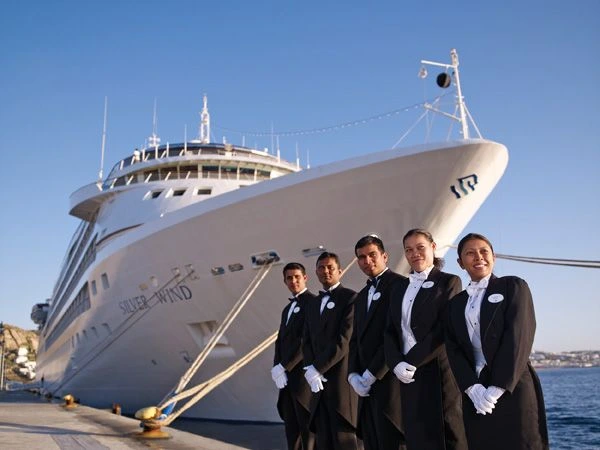
Every year cruise lines (such as Royal Caribbean, Carnival and Norwegian) hire thousands of employees to work in various positions, including
- Waiters
- Housekeeping
- Cooks
- Entertainers
- Security guards and
- Doctors
Before you are allowed to go on board the ship, you must complete some training. This is a requirement that all cruise lines have for all passengers.
Training can take anywhere from 2-3 weeks up to 2 months depending on the position you are training for. Training is done in different countries (i.e the Philippines, Indonesia and India) and several other locations throughout Europe; however, no matter where the training takes place, the end result for each trainee is to prepare them for work on a cruise ship.
Day One of Training: Introduction & Reality Check
Day one of training is often an eye-opening experience for many employees. You are asked to open your suitcase and dump everything (clothing, shoes, etc.) onto the ground in front of you. Many trainees believe that working on a cruise ship will be like living at a party 24/7, however, your trainers will attempt to remind you that “this is not your home; this is your office.” Basic safety training will commence shortly afterward.
The STCW (Standard Training Certification and Watchkeeping) training course is a requirement that include training on:
- How do ships sink.
- How to perform a rescue to safety.
- How to operate lifeboats.
- Firefighting (practicing extinguishing fires).
- First Aid (Including CPR, Treatment of Burns).
The stress of these types of exercises causes many trainees difficulty falling asleep at times. A friend of mine shared that in the first week of his STCW course, 12 people left the program from exhaustion.
Department-Specific Training
Once employees have successfully completed their general training, employees have been assigned their specific position which necessitates additional training prior to starting.
Housekeeping Staff : For example, housekeeping staff will learn how to clean an entire cabin in 15 minutes or less which includes making beds, folding towels, un-scrubbing bathrooms to the point where they sparkle and every step taken to complete these actions will be measured. In some cases, an employee may make a single mistake and have to repeat the entire process up to ten total repeats.
Waiter/Bartender : For every waiter/bartender, they are required to memorize the wine list, specifically what temperatures to serve which of the red wines, how to prepare more than 50 types of cocktails, and they will be trained on how to assist intoxicated guests.
Kitchen Staff : For all kitchen staff, soap and water levels are rated by levels 1-3 which tells them how to wash their hands before cooking, and in any food establishment on board a cruise ship, the prevention of foodborne illness from guests is the number one priority.
Entertainers : For all entertainers (dancers/singers/comedians), you are required to perform all types of entertainment, however the most difficult type of performance is “Guest Interaction” which consists of keeping children and the elderly entertained and keeping all age groups entertained at all times.
Simulations and Real-Life Drills
Realistic simulations of life on board a ship and performing duties as a crew member offer the most exciting opportunities. The actual simulation uses a full-size model of a ship that includes cabins, dining areas, and even a bridge to be operated under simulated conditions of being out at sea.
- The first simulation you will experience is called “Fire on Board!”, you hear a loud alarm blaring, and you have exactly 90 seconds to put on your life jacket and make it to your designated lifeboat station!
- The next simulation is “Guest Injured!”, you will have to quickly grab a stretcher after identifying an injured guest, even though you may have to administer CPR.
- Next is a “Storm at Sea!”, the ship is pitched and rolling, objects flying everywhere, maintaining balance while providing service all at once.
Trainees also feel that the training simulation is so very real that some trainees have actually become scared.
Mindset Training: “Guest First“
Training for your onboard cruise ship position starts out with developing the proper mindset to serve your guests. You will hear frequently that “There are no days off here: every guest is treated as your boss.”
- A smile is always required (even if you have just finished working for 15 straight hours).
- You cannot ever say “No” when a guest requests something; the only acceptable statements are “Yes, Sir” or “I will see what I can do.”
- You will usually work a ten- to twelve-hour shift with only one day off in a week. The only time that you will receive a day off is if the ship is in port on that day.
Final Evaluations and Certifying
On the last day of your training, you will complete both a written and a practical evaluation. If you do not pass both evaluations, you will return to your home.
If you do pass, then you will receive your STCW Certification, medical clearance, and your cruise line ID. You will then begin your real job by boarding the cruise line’s vessel.
The Truth That Nobody Tells You
Everyone in training tells you “This is just the beginning,” and they are correct. As soon as you step onto your vessel, you realize that what you learned in training was only about 60% accurate.
The additional 40% will come while working; learning how to “read” your guests’ moods and/or how to resolve conflicts amongst your crewmates, plus accepting that you will be awake at 3:00 AM for alarms.
However, all previous trainees have said that it was the most difficult but rewarding experience of their lives. While your paycheck is nice, working on a ship will allow you to live a new lifestyle.
Comment below for: Which airline are you interviewing for next? I’ll give you a specific solution for your interview.”
Comment below for: Are you struggling anywhere!, Kindly let us know, We will give you perfect solution.
Is STCW training needed for jobs on cruise ships, and what is it?
Yes! Everyone who works on a cruise ship must take Basic Safety Training according to the STCW (Standards of Training, Certification, and Watchkeeping) Guidelines. Included in this training are topics such as personal survival techniques, fighting fires, administering first aid, and fulfilling social responsibilities. All cruise line companies will typically provide this training to new employees during the onboarding process if the person does not already have received the training (especially for employees applying from the USA).
How long does the training last to work on a cruise ship?
Most pre-joining cruise line company training, which would include STCW, can last anywhere from 1-4 weeks at the training facility. After arriving on board, there is also usually a 1-2 week period for familiarizing with the ship and department-specific training before assuming all responsibilities.
Will I need experience/certification to apply for a cruise ship job?
No cruise ship experience is generally required for most entry-level positions (e.g housekeeping, cooking, serving), although having experience is an asset if applying for these type positions. Most cruise line companies will provide training to their new hires even if they do not have any type of hospitality experience. A Basic Safety Training course in accordance with the STCW guidelines will be provided once hired, in addition to providing proof of medical clearance and submitting to a background check