What is the work of Cargo and Ramp Staff on Airport
The Amazing Behind the Scenes Workforce That Connects the World At the airport, most travelers know about the check-in counter, security and the gate, but few realise that there is a group of men and women behind every flight, the ramp and cargo team, who are equally as important as any others and who help keep everything running smoothly. Without the ramp and cargo teams no flight can operate. Let’s look at what they do, what pressures they experience and how special these jobs really are.
Table of Contents
The Cargo Staff
The cargo staff is responsible for handling all cargo and baggage that is shipped via air. The area that is designated for this area is called the cargo terminal. Cargo can be anything from computers to produce, pharmaceuticals, to car parts, to live animals, to petroleum products, and in some cases, even to oxygen cylinders.
When cargo arrives at the airport, it will first be unloaded from the truck. The cargo staff will inspect each box. If there is any damage to the exterior of the box (i.e, cuts or leaking), the staff will not be allowed to handle the box or the items inside. Next, each box will be weighed and scanned. The weight and balance of an aircraft is of utmost importance. If an aircraft has too much weight on one side, the aircraft can tip to one side when it is taking off. This can be unsafe for the aircraft, crew and passengers onboard.
Once everything is complete, the cargo handlers will load the items into the ULD (Unit Load Device) — which is basically a large box/trailer that fits inside of an airplane using forklifts, conveyor belts, or sometimes even by hand. In addition to loading goods, they need to monitor the temperature while the items are being loaded as some items (e.g., vaccines, flowers) require the use of a refrigerated container.
CSD has the sole responsibility for customs and security clearance for the items being loaded by CSD. Some countries require special approval for items such as medicine or live animals; therefore, all of the documentation related to customs and security clearance must be completed prior to the aircraft departing. If one document is not correct, it could result in the aircraft being grounded.
Working hours are very long (12-14 hours per day) with shifts starting in the morning or at night. All weather conditions can be faced during a typical workday. The job is very risky, as the cargo handlers perform tasks that could pose a hazard to themselves and others (e.g. if an item such as a battery or chemical were to leak, it could create a fire), which is why there is ongoing safety training conducted on a monthly basis.
Ramp Workers: The Protectors of the Aircraft
Now let me explain who are ramp workers. These individuals are present outside, on the ramp, directly underneath the aircraft and at the end of the runway. Once the aircraft arrives on the ground, they first guide it into position with the stand-by aircraft by using their orange wands to point out the location where they would like to park the aircraft.
Next, the ramp workers put chocks (pieces of metal) in front and behind each of the aircraft tires to stop the movement of the aircraft.
After they finish putting the chocks on the tires, they begin assembling the baggage conveyors. Baggage is transported from the baggage truck to the baggage conveyor. Baggage will be loaded onto the baggage conveyor and then transported (loaded) into the aircraft within a maximum of thirty minutes. If there is any delay in loading the baggage, the airline will incur financial loss of millions (in the form of flight delay penalties).
Ramp workers are also responsible for fueling the aircraft. The fuel for the aircraft is kerosene, and is delivered through a hose from a fuel truck directly into the fuel tank. Each gallon of fuel that is loaded into the aircraft must be accurately monitored; if an aircraft receives too much fuel, the aircraft will be overweight, if an aircraft receives too little fuel, it could run out of fuel in mid-flight.
De-icing a plane in winter is the toughest job. When ice builds up on the wings of an aircraft, if not removed quickly, it would create drag when the aircraft takes off. Special de-icer fluid is sprayed onto the aircraft to melt and remove the ice in a short period of time (10-15 minutes).
The ramp agents also service aircraft by cleaning the lavatories, filling the water tanks, catering the aircraft, and performing some minor maintenance, such as verifying that there are no oil leaks on the aircraft engines. All fore-mentioned services must be completed very quickly, accurately, and without any mistakes.
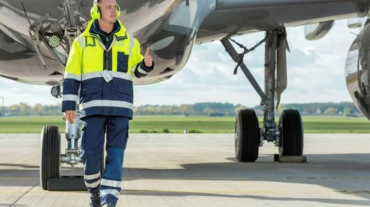
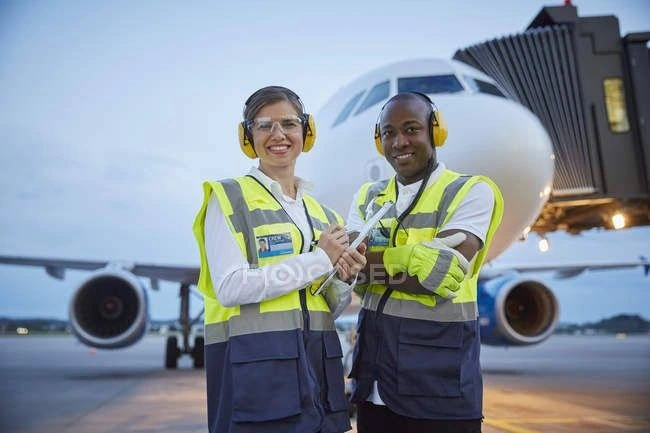
On the ramp, the most dangerous part of working is when the aircraft’s engines start up. After starting an engine, it will produce winds up to 100 kilometers per hour; an employee could easily be blown away if they inadvertently stepped in front of a running engine. This is why ramp employees wear headsets, high-visibility vests, and follow strict guidelines.
What do both teams have in common?
Safety comes before anything else in both jobs. For each shift, there is an orientation on the flight arriving, any special equipment that will be needed and what the weather will be like. Communication on the radio is also a regular occurrence. Do not show any signs of being tired; making one mistake could cost you your life plus 200 others.
In terms of pay, cargo and ramp employees in India earn an average monthly wage of Rs. 25,000 to Rs. 50,000, plus additional money for overtime or working at night. However, both positions require a lot of physical labour and many of the employees will experience shoulder and/or back pain. However, the employees take pride in saying that, “If we don’t handle the freight, the plane does not take off.”
In the Last
The ramp and cargo employees provide services that are performed in the “back stage.” While passengers only need to show their boarding pass to leave, behind the scenes these employees make sure that airplanes are in readiness for their flight 24 hours a day; by, for example, loading baggage and refueling aircraft. The next time you see an airplane land, take a look outside; those people in high-visibility vests are what keep our airlines connected.
What does a ramp agent/cargo handler do for their job every day?
This includes the actual daily tasks performed by the ramp agent/cargo handler; such as loading/unloading bags and cargo, marshalling the airplane, driving tugs, de-icing, performing fuel checks, etc.
What are the qualifications and basic requirements to become a ramp agent/cargo handler in the United States?
Some of the more common concerns include the minimum age (usually 18 years or older), obtaining a high school diploma or GED, possessing a valid driver’s license, being able to lift 70 pounds or more to complete tasks, being legally allowed to work in the U.S being subjected to a background check, and passing a drug test.
What is the average salary of a ramp agent/cargo handler in the United States? (Income, pay, and benefit)
When discussing pay for a ramp agent/cargo handler it revolves around their starting rate of pay; typically, it ranges from $15-$25 per hour depending on the airline/location (for instance; Southwest Airlines starting between $19 and $20 per hour) and also offers overtime, shift differential pay, and free flight benefits.
Is the job physically demanding? Can someone without an athletic background (out of shape) perform all the tasks required of a ramp agent/cargo handler?
Inquiries regarding heavy lifting, longevity (of both standing/walking to perform job tasks), exposure to extreme environments (i.e, hot/cold/rainy/snowy), or risk of back/shoulder injuries have been frequent
How do the work hours and schedules look? (Shifts, night shifts, weekend shifts, holiday shifts)
Many have irregularly scheduled shifts shifts may be early morning, late evening, on weekends, and/or on holiday, and/or several employees must work mandatory overtime during times of increased volume of work.
What are the safety regulations and other risks at the ramp/cargo operations service areas?
The most common Safety Regulations will focus on Jet Blast, coming in contact with the Jet Blast, moving aircraft/moving equipment, hearing protection for workers in the cargo area, the wearing of high-visibility gear for workers and the aircraft, strict handling procedures for Dangerous Goods (DG), no foreign object debris (FOD), and requiring reporting of unsafe acts.
Comment below for: Which airline are you interviewing for next? I’ll give you a specific solution for your interview.”
Comment below for: Are you struggling anywhere!, Kindly let us know, We will give you perfect solution.